Tuesday, June 10, 2014

And Now On BBC Two.....

As an American, some of what I know about British television was learned a long time after I what I had seen on PBS. When I was watching these shows that would mold my viewing habits, I would have very little idea of the broadcast history of them. Yet, eventually that is what really caught my interest as I got older. I wanted to know more about how they aired and what the social climate was like when they were on TV.

There are people around, mainly in the UK, that track such matters closely. They want to know (and log) the date a program aired, what region of the country and everything else to do with it. What is in interesting about this is that as an American I want to know all of this too about my favourite British television shows. This is why whenever possible, when I am writing about a specific series, that maybe I could find the Radio Times listing for the series. These listings about programs are just as important as the programs I am writing about for my articles. This is why I was shocked by what I didn’t know.
I think for some time, I had known that there was a second BBC channel. I say this in the sense of back in the 1980s and 1990s. Obviously now there are many more channels than that. In fact, I think it is funny that many people thought the idea of a BBC3 from The Dæmons would be fantastical. I knew of BBC2 for some time. I thought it was a cool idea to have a second channel for BBC output. The thing was is that I figured something with a two behind it would mean that it wasn’t as good as the original. Of course this is naïve but I had strong evidence to back this up. As I was watching all of the grand BBC output that my local PBS stations would show, I knew that this was all stuff from BBC1. It stands to reason that all of the grand stuff would be on BBC1 and I figured that all of the “artsy” stuff would be on BBC2. BBC1 is the place where everyone would enjoy such classics as Yes, Minister, Red Dwarf, The Young Ones, I Claudius, or Tinker Tailor Soldier Spy. Surely I wasn’t wrong, was I?

It’s always fun to learn new things. Sometime ago I learned something that was going to finally bring me up to speed with the rest of the world, but I will get to that later. On April 20th of this year, BBC2 celebrated its 50th anniversary. I learned some time ago that this is a channel of quality. There is a lot of great series and concepts that came from the channel. It started its output on 625 line television which was the native PAL resolution until the turnover to HD. BBC1 still had their output in 405 line. BBC2 was the first network in the UK to broadcast in colour in 1968. In 1979, it heralded the first computer generated television ident. Jane Root was the first woman television controller for the BBC and she was the Controller of BBC2.
To celebrate the 50th anniversary of BBC2, of course I can’t watch anything recent about the channel. That would make too much sense.  In my usual way I have to look at something that in itself was made years ago. I looked back at a series of specials that was made in in 2004. I liked it because it was a nice overview of the archival content of the channel. Unfortunately, this only covers up to 2004 and obviously BBC2 has done much more in the last 10 years but I still really wanted to watch this again because it opened up my eyes.

Happy Birthday BBC Two TX: 20/04/04
This special is broken up into 4 parts by decade. Obviously, the stuff from the 1960s through 1980s was the most interesting to me. There was much I didn’t know and I love that so many clips were pulled from the archive to be represented here. The first treat that we are introduced to is the night of the first broadcast of BBC2 on April 20th 1964. That night, as things were progressing, there was a fire at the Battersea Power station which is where the BBC2’s power came from and the channel went off the air on its first night. BBC1 stayed on the air because it was transmitting the signal from Alexandria Palace. There would be brief news updates anyway on BBC2 throughout the evening but it was thought that the videotape recording of the night had been lost but it was in fact found in 2003. I forgot about that bit of information. It was so cool that it had been found but even better that parts of it made its way onto this program.

The things that stands out to me the most about the 1960s segment is that there were a lot of innovation and creativity in type of programs that were being presented. They knew the type of programming that was coming out of BBC1 and wanted to make sure they were doing something different. I heard it said a couple of times throughout the program that they wanted to make sure they were giving the licence payer their money’s worth. I suppose there must be some truth in that, it would be interesting to see what the general public thought about BBC2 being created at the time since most of the public’s TV sets wouldn’t be able to get the channel. Most of the TVs at the time would only pick up the 405 line signal and not the 625 line one.
Some of the innovation that came out of the BBC at the time was stuff like Late Night Line-Up. It was a series that brought people together to discuss the channel’s output. They showed one of the famous clips when the comedy writers were invited on the program. I think the program was put together relatively quickly earlier in the evening so these writers were invited while drinking at the BBC bar at Television Centre. One writer wasn’t invited yet broke into recording and had to be led away. There were the Beat Girls which included some dancers that would go on to be in Pan’s People. Pan’s People were a group of female dancers who would often be on Top of the Pops in the 1970s. It was cool to see more about Not Only…But Also. It was cool to see how Peter Cook was not originally thought of on the same level as Dudley Moore until people saw them together and thought he needed to be part of the series. A big deal is made about The Forsythe Saga which is a DVD set that sits on my shelf and I still have not watched all the way through. I keep wishing it would come up in my random picking one day so I can properly sit down and watch it.

This program also showed some of the truly thought-provoking programming throughout the decades and one that stood out for me from the 1960s was an edition of Man Alive. The episode was called Gale is Dead and it was about this 19 year old girl who was addicted to drugs. She is interviewed for the episode. Sadly, she dies during the making of the program which is especially upsetting as she believed she was going to die alone and unloved.
It also shows programs that have stayed on the air for years such as Call My Bluff and they do a montage of the some of the great celebrities that appears on the program.

Speaking of wanting to make sure the licence payers got their money worth, David Attenborough talks about a program that looked really good called Civilisation. It was a series about Western art, philosophy and architecture since the Dark Ages. Shot on film, it took viewers to places they have never seen before. Seeing it from the DVD-R I was watching, I thought it looked great but immediately thought it would be amazing if this was available on Blu-ray. I found it is and I ordered it!
I think something I was trying to get my head around for a while finally came to me when I started seeing some of the clips from the 1970s segment. I was trying to find a way for me to understand BBC2 in a way that I could relate; I thought I could but wasn’t sure how. Suddenly it came to me. In my opinion, I relate BBC2 (the early years) to that of the early years of PBS (Public Broadcasting) in the US. It’s not because they imported programs I had no idea that ever aired on BBC2 such as Fawlty Towers but there was a sort of raw experimental energy to it. At times there was something quite intimate to it.

I think something that made think that was the shots from The Old Grey Whistle Stop. Some of the clips that were shown reminded me of something like Austin City Limits. It’s sort of a stripped down program. I think another relevant example would be a series such as Ways of Seeing. It’s looking at art but from different perspectives. It can be high-level thinking which can either put viewers off or challenge them to think differently or be critical thinkers.
Something that stood out that I think I want to see is a series called Arena. One of the famous films from this series was Ford Cortina but I want to see the film about My Way. It is not only about the famous song but what it means mainly to the many people who have sung it.

I think while watching the 1970s segment I started to realize what I didn’t know. I figured everything we saw on our PBS stations just came from BBC1. There is no reason for this kind of thinking, it was just something I assumed. While watching this, I started to see programs that I figured came from BBC1 but in fact originated from BBC2 such as FawltyTowers, I Claudius, Tinker Tailor Soldier Spy, and Not The Nine O’Clock News. It made me finally realize that one channel isn’t better than the other, they are just different channels. It seems silly that I need to admit that but here I am in 2014, the 50th anniversary of the channel doing just that.

We move into the 1980s with more series that shocked me to see them originate from BBC 2 such as The Young Ones, Yes, Minister and Yes, Prime Minister, The Borgias, and The Edge of Darkness. For some reason, I always knew that Red Dwarf had aired on BBC2. What I didn’t know was that Top Gear had been running on BBC2 since 1977. It was re-worked in 2002 but Jeremy Clarkson had been on it since 1988.
From 1980s we get Newsnight. In fact, you could own Bill Paxman’s desk from the program as part of the big auction of stuff from BBC Television Centre. Paxman hosted the series Did You See….? which originated with Ludovic Kennedy. The series looked at the television output from that week with interviews and features. Many a Doctor Who fan will know this as there is some incredibly good archive content that is on the DVDs thanks to this program.

Moving into the 1990s we see how technology influences how series are made. There was a series called Video Diaries. It was using cameras that are portable to be able to shoot and tell a story. In some cases the video looked like it was shot on consumer equipment and while some people who worked in the industry weren’t fans of the series based on the technical quality, there was a large viewer base for the program. BBC2 also had a serious coup of sorts with their program Death of Yugoslavia which was made at the time when Milosevic was taking over. There is a scene with the government calmly discussing the invasion of the area.
Other series that came up in the 1990s on BBC2 were Have I Got News For You and showed a clip where Pierce Morgan is on the program making a very unfounded claim. He is now on CNN as he replaced Larry King. The UK can take him back any time now. Other shows, Later with Jools Holland, The Fast Show, Our Friends in the North (which I need to see), I’m Alan Partridge and Goodness Gracious Me.

I completely forgot that Two Fat Ladies was a program on BBC2. When I fell in love with the Food Network (which is basically shit now), this was one of the series shown at weekend. I loved it for the locations they would go to cook. Unfortunately the show came to an abrupt end when Jennifer Patterson died in 1999. Only this last March did the other half of the duo, Clarissa Dickson Wright passed away. It’s a fun light hearted show with a lot of character. I love cooking shows and I loved watching this show. That being said, I would never want to make any of the dishes those two ever made. None of it ever looked good to me. Another series that came out around this time on BBC2 that I saw on the Food Network was Jamie Oliver in The Naked Chef. Two great series that I had no idea were on BBC2.
I found it interesting that there was a small segment around the fact that although it wasn’t getting a lot of viewers that people were outraged that the simple country series One Man and His Dog was cancelled. It looked like people felt good knowing that it was there but didn’t actually want to watch it. Well, if you like a series enough, you should probably watch it. Seems sensible and it seems that is what people do with the program Gardener’s World. It started in 1968 and is still running. Granted it may have slightly more appeal than One Man and His Dog.

In the “why have I never seen this before?” category, I am seriously baffled why I never watched the BBC2 produced film Shooting the Past. Starring Lindsay Duncan about the imminent closure of a photographic library and its staff, the film looks emotional and great. Luckily it is only available on DVD because I am sure something like that could never benefit from a Blu-ray release! Ok, sarcasm over. One final entry into the 1990s is a series, for some reason, I have no interest ever seeing. The League of Gentlemen started in 1999. Many people I knew watched it so I when it got its premiere on Comedy Central, my friend Robert and I decided to watch it together. Neither of us was impressed and I never went back to it again. Maybe someday I will take another look but there is so much more I want to get to first.
Into this century, the list becomes smaller. As I mentioned, this program covered stuff up to 2004 and it is now 2014. That being said, the amount of programs covered by this point is pretty staggering.

I forgot that The Weakest Link was a BBC program. Of course there was The Office back when Ricky Gervais was funny. I always have a soft spot for Little Britain. It is funny and it gave jobs to two favourite actors Tom Baker and Mollie Sugden. When I worked at Best Buy, I had a friend who loved the series and we would quote lines back and forth to each other. We even had a viewing of episodes at her house once and it was a lot of fun. It’s fun when you find out about people who watch the stuff you love and you can start sharing the joy of the programs. As British television is regaining ground in the US, this is becoming more and more common. Series such as Sherlock, Downton Abbey, Call the Midwife, Foyle’s War and of course Doctor Who are just as mainstream in the US as any of the programs on US cable or even network stations.
There is one piece that almost overshadows everything throughout the entire 4 decades shown in this program. That being said, it certainly didn’t at the time. In 2000, Broadcaster Louis Theroux did two series of documentaries on interesting people. It was called When Louis Met….. and the first episode was titled When Louis Met…..Jimmy as in Jimmy Savile. At the time, Jimmy was an interesting, eccentric character. Known as a charity worker and best known for his series Jim’ll Fix It. That series was about making children’s wishes come true. The documentary focuses on Louis trying to crack Jimmy as Jimmy doesn’t feel like he has any certain type of emotions. One sign of how eccentric he was is when we see that he kept all of his mother’s clothing long after she died, keeps it in a closet of just her things and has the clothes taken out once a year for dry cleaning. One of the things Louis says in the interview for Happy Birthday BBC Two was trying to get down to the subject to answer claims of is he or isn’t he (Jimmy Savile) a pedophile.

Jimmy Savile died in 2011 and almost immediately afterwards hundreds of people came forward claiming that Savile had molested them when they were children. There were countless allegations of sex abuse and rape towards Savile. This led the police to believe that Savile was a predatory sex offender and may have been one of Britain's most prolific sexual offenders. Like I said, this program aired in 2004 and since the allegations came out it put the BBC in a very sticky situation considering that Savile’s career was with the BBC, he was closely identified with the BBC and people who worked with him turned a blind eye to his horrible activities. My guess is that in the 50th anniversary, this may not have been touched on. But then again, this program was rebroadcast in April of this year, was that segment edited?
That being said, the overall theme should be one of celebration especially since BBC2 has had an amazing history full of great programs and wonderful innovation. The lesson I learned is never judge a channel by its number! Happy birthday BBC2!

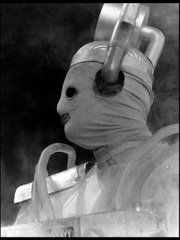
Next week: I look at Missing Believed Wiped. Not so much the event but the concept. So much of the past of British television is missing but over the years a great deal has been returned and I am going to focus on that. I look at the 2004 BBC4 documentary for TimeShift Missing Believed Wiped, two episodes of The Complete and Utter History of Britain, Till Death Us Do PartState Visit, The AvengersHot Snow, Adam Adamant Lives!D for Destruction, Steptoe and SonMy Old Man’s a Tory and although I said I wasn’t going to include it, I will include some Doctor Who. That will be The Underwater Menace Episode 2.
Have a great week!
Do you have feedback, article requests or want to talk about a program but do not want to leave a public comment? Feel free to drop me an e-mail at FTA13867@gmail.com

I am on Twitter: @FromtheArchive Please follow and retweet these article if you like them.


Also please subscribe to my From the Archive: British Television Blog Facebook Page for updates about new articles.


Monday, June 2, 2014

Blu Ray Review: An Adventure in Space and Time

An Adventure in Space and Time
Blu Ray /DVD Combo (3-Disc Set) (Main Feature: 90 min)
Released by BBC Home Entertainment on May 27, 2014. SRP $24.98 (Blu Ray)
Subtitles: English SDH 16:9 DTS-HD 5.1  HD: 1080p

I’ve mentioned other places about how in the US market, we have been pretty lucky with releases of our favorite shows. I am mostly referring to how we seem to be a Blu Ray friendly market especially in terms of British television. There have been a lot of programs released over here that has not been released in the UK on Blu Ray. This is great for us but not so great for fans in the UK.
As I have been writing reviews, I get e-mail from people in the UK asking me to check Blu Ray discs of George Gently or Poirot to see if they are region locked. When it came to Doctor Who fans, they had been pretty lucky getting Blu Ray releases of our favorite series but there is one program that they weren’t so lucky with getting in a high quality HD format. This review covers the US Blu Ray release of this special.

An Adventure in Space and Time is a program that a lot of people have been waiting for a long time to see. It is the story of the conception of Doctor Who but seen simultaneously with the story of William Hartnell who played the original Doctor. There was a time when Doctor Who was not seen as an alien who could change his appearance and was part of a super powerful race that were almost gods upon the universe. In the beginning, Doctor Who was a program that focused on stories from our past plus stories set on magnificent alien worlds. The Doctor wasn’t a known menace to all the malevolent forces in the universe, he was a scientist and an explorer. It was very simple. This was the story of where all that started.
The phrase, “An Adventure in Space and Time”, actually comes from program listings of the Radio Times. The Radio Times was a magazine produced by the BBC to let British viewers/listeners know what programs was coming up on their various channels. From 1923 to 2011 it was solely a BBC product but that is no longer the case. From the time Doctor Who series started until Episode 10 of The War Games in 1969, every listing for Doctor Who gave the heading “Dr. Who” along with the sub-heading of “An Adventure in Space and Time”. I love that phrase because it is mysterious. It could mean anything and I think it is great. That was the perfect title for this program.

The film starts with a BBC Continuity close to the style of the time of the first episode broadcast in 1963. I think what it is really saying that this is a fictionalization of the events of the time period covered in the film and certain liberties have been made. Yet, what I think it is really saying is for purists like me is to just relax and enjoy the film! Duly noted!
Although Doctor Who started in 1963, the film begins in 1966. We start off with the recording of the final regular story William Hartnell appeared in, The Tenth Planet. It’s as he walks into the TARDIS set for the final time he remembers where it all started for him and it is also our journey back to where the story began for Doctor Who as a series. It all begins with Sydney Newman.

For all intents and purposes Sydney Newman is the creator of Doctor Who. It was him that got things going but as the series progressed in conception it became a bit more of a group effort. The one thing (as a purist) I needed to remind myself when seeing this was that dramatic license was needed to be taken in the film. There are times where this bothered me….a lot. That being said, I understand that this was necessary. Just look at how this film starts. It goes from Sydney bringing in Verity Lambert to start production on the series to actually recording the first episode really quickly. To paraphrase Douglas Adams, “The BBC is big, really big.” This film needed to get a lot of things done in 90 minutes. It needed to tell how Doctor Who was just an idea and how Sydney assembled a team to put it together. It told the story of William Hartnell who was tired of the type-cast roles he was playing and wanted something different. These pieces needed to be simplified or the production would have been mired in the minutia of how difficult it was navigating through the BBC.
The story of Doctor Who in some ways takes a backseat as it is more of the story of the people who made an impact on the series. Sydney Newman is portrayed as a breath of fresh air the BBC which he was. He made a further impact by bringing in an unknown production assistant he worked with at ABC named Verity Lambert. Woman in roles of importance at the BBC were few and far between. I can only think of a few and one who played a big role in things at the time this film took place was Joanna Spicer. I was disappointed to see she was not represented in the film.

As production gets underway, Verity is brought in to get things going. Immediately she is in conflict with Director/Producer Rex Tucker who sees her as someone who could probably get him some coffee. He was brought in to help get things moving until a permanent producer was named. This is one of many moments throughout the film where things could have turned out much differently. If Verity was a meeker person who just took the advice of Rex Tucker to stay out of the way, what would we have? She stood up to him and also Mervyn Pinfield who was politely telling her it may be a good idea not to dismiss advice she was given but she was too strong of a person to allow that to happen.
We meet the first director for Doctor Who, Waris Hussein. He just came off from working on Compact and was eager to do some good work. It is clear that not only Verity and Waris had an instant rapport but they were on the same page with what they wanted Doctor Who to be as a TV series. They both understood the tremendous opportunity they were given. It is interesting to see Verity clearly fancied Waris and did not see right away that he was homosexual which was illegal at the time in the UK.

The two of them meet the man they want to play Doctor Who, William Hartnell.  Played by David Bradley, I think he does a great job. It’s tough because there is only one visual interview that exists that we can see what Hartnell’s mannerisms are like so it is really tough to play someone with so little reference material. There are times I see him and think he only has a passing resemblance to Hartnell but then there are some shots and he is almost dead on. It’s actually quite eerie. I actually think he looks more like Hartnell from around the time of The Three Doctors. Of course, in the “making of” on this disc, Carole Ann Ford says how emotional it was for her to see Bradley play Hartnell. I think she approved and if it is good enough for her, it is good enough for me.
When we meet Hartnell in the film, I wouldn’t say he was down on his luck but he was at a crossroads with his career. He was tired of being type-cast in army roles and being a tough guy. We see him watching an episode of a series he was in The Army Game. He reminds his wife Heather that he is a legitimate character actor of stage and film. He is not happy where his career is going and it is clear that when Hartnell is down, everyone by virtue of being in his presence ends up being down (or traumatized) too. I think it is clear that Hartnell was a good man but would get preoccupied when things weren’t going well and that is seen a few times throughout this film. Then, one day Heather receives a call from his agent to meet about a new role.

There is a great scene that takes place in a Chinese restaurant where Waris and Verity are trying to sell Hartnell on the prospect of playing the role of Doctor Who. They really talk it up and I think there is a wonderful piece of storytelling to keep the story moving forward. Verity is proclaiming all the great things about what Doctor Who will be and she points out some of the great features of the new production. While this is happening, we get a montage of these pieces. Some good and some not quite a slick as Verity is promising. All of this is accompanied by one of the most unique and wonderful pieces of music ever, the original theme music to Doctor Who. It’s a moment that all fans should get the chills from. I think it is so easy to take for granted this amazing iconic series but this scene ties all these amazing elements together and 50 years later, they are still prominent in the program.
It’s not a big part of the scene but it is worth pointing out that Hartnell was a product of his time. In the restaurant, he makes a mild racist remark to the waiter to get him a drink. He may had never even saw it as racist though it is well-documented that this was part of his personality. I think it was wise that the production did not make this a big part of the film. Perhaps it is too easy for me to say for me to rationalize this with Hartnell coming from a different era, yet I am glad it was at least touched upon. Verity seems to sum up the role to Hartnell at the restaurant in a way he couldn’t refuse. The character was the mix of C.S. Lewis meets H.G. Wells meets Father Christmas. I am not sure if Verity actually said this but it works for me.

As production gears up to record the pilot, we get a press call with a photo op with the new cast to this odd little series to be called Doctor Who. Along with Hartnell there is Carole Ann Ford, Jaqueline Hill, and William Russell. Shot outside the “concrete donut” of BBC Television Centre, this scene recreates the famous photo call. This is photo op “set up” is also used as the film progresses to emphasize the many changes to the cast while Hartnell is in the role.
A great deal of time is spent with getting the work of the first few stories ready for production with an emphasis on the pilot episode. This is really a treat to the eyes of Doctor Who fans. We get amazing recreations of sets from the early stories. We see the I.M. Foreman Junkyard but we get the TARDIS interior. This beautiful recreation of the set is simply stunning. Seeing it in HD is a real treat and once again reminds me of how groundbreaking this set was.

We get into studio at Lime Grove to shoot the pilot and we see all the things that went wrong with the production. It is evident that production did not go well for them as we know the Pilot episode was re-mounted but it was not quite as bad as how it is made out in this film. The production comes to a halt because the sprinklers go off, it is known that if the studio got too hot, this would happen but this was not the case in the recording of the pilot episode. Nor was there a Caveman on hand for the recording. The shadow of the caveman against the TARDIS was shot on film prior to the studio recording.
We get to see some of the famous arguments that have since become legend in the history of Doctor Who. There is the famous argument between Sydney Newman and Verity Lambert about the Daleks. When Verity took on the job of producer, she was told by Sydney that there were to be no BEMs on this program, BEMs are Bug Eyed Monsters or robots. The Daleks was a story that Verity had commissioned from Terry Nation. Even though the Daleks, at first glance, could qualify into this category, Verity saw that they were so different. Sydney is furious about this story going into production but Verity stands her ground. The story goes into production and the rest is history.

There is a wonderful mis-direct that has fooled me almost every time I watch this. Sydney is reading the script to The Daleks and is reading the description of what they are. As he reads it, it almost looks like we are seeing a Dalek up close but it is in fact the rifle of Lee Harvey Oswald getting ready to shoot Kennedy. Visually awesome! The recreation of the Daleks being recorded is nothing short of amazing. The way everything is lit to the shots of the Daleks, shot from below looking up gives me chills. How amazing would it be to have a retro style series using the sets and props from this production? Sadly, not very likely but one could dream.
There are a lot of great moments to the story that need to be watched but as Doctor Who starts to succeed, change is in the air; at the center of it is William Hartnell who just wishes that everything stays the same. He sees as successful series and doesn’t know why someone like Carole Ann Ford would want to leave. Finally, Verity moves on. There is a great scene when she leaves; she and Hartnell have a moving dialogue about change. The inevitable happens that Hartnell is also changing. His health is deteriorating. As more and more people join the series, he is overwhelmed by the change. We keep getting treated to the photo call outside of Television Centre as the new companions are rolled out and finally he just stares into the camera. It’s all becoming a blur to him.

Through his illness and the hatred of change of production personnel, he is deemed too difficult to work with and finally is told that the series is moving on but he was no longer going to be in it. It’s strange that Mervyn Pinfield and Sydney Newman are talking about removing Hartnell but Pinfield was off the series by this point and I really don’t think the news was broken to Hartnell by Sydney. Obviously, once again it is to simplify the story and simplify the number of people who actually had taken part in the series even by this point.
At the end, whether completely accurate or not, we are treated to a scene where the role is “handed over” from Hartnell to Troughton at the recording of The Tenth Planet Episode 4. When watching it again, I am taken with how much the old guard is leaving with the new regime taking over. It is quite an odd revelation considering that there has been so many regenerations it has been taken for granted but this was the first one. On the studio set was the stoically pleasant old guard William Hartnell in his costume one last time. On the other side was Patrick Troughton who didn’t really know what to do in the situation and trying to make light of it. It’s really cool we get to see this. There is also one other surprise in the scene that I will not ruin for those who have not seen it yet. It’s a very nice touch.

The production itself is very well-made. It is slick and energetic without being mired in too much nostalgia. It has a lively direction from Terry McDonough.  The attention to detail in the props is great. Never in the years of being a fan would I have thought we would have gotten a production like this on such a scale. This was made by people who cared. The opening on Barnes Common at night with gloomy fog and a dimly lit Police Box is special. Also the opening credits for the film using howlaround footage from the actual opening credits to Doctor Who was awesome! For me the highlight of the film was using BBC Television Centre.
If you read any of my work before, you may have noticed that I have a crush on BBC Television Centre. I love the place and I love its importance in television history. When the BBC moved out in 2012, I wrote about it here. A lot of the story centers around BBC Television Centre and therefore much of the story is filmed around it. There are lots of recreations within Television Centre redressing parts of it to resemble what it looked like in the early 1960s. What a treat! I believe this was the last drama ever filmed at Television Centre. How fitting! Here are some beauty shots from the film of BBC Television Centre:


I have a feeling that the characters in this are very simplified versions of their real counterparts. There are so many of them competing for screen time! Sydney is really interesting. He comes across as a movie mogul. I do not doubt for a second he wasn’t larger than life. He really came in to ruffle some feathers at the BBC and he made change for good reason and not change for the sake of change. His reorganization of the BBC probably saved the corporation even before they knew they were in any trouble. Though, I am not entirely sure he ended every sentence with “Pop, pop, pop!” I could be wrong. Mervyn Pinfield also comes across as a very helpful resource to Verity. The film gives us a little hint to how brilliant he was as he basically created the tele-prompter.
It’s hard to gage the roles of William Russell, Carole Ann Ford and Jaqueline Hill. They are in it to be supportive to the story. They don’t have a lot to do in it but they are pretty accurate looking to the production. I thought Claudia Grant as Carole Ann Ford was great and got her mannerisms perfectly.

The story from Mark Gatiss is very good. It had to be tough to incorporate so much history of the series in 90 minutes. It’s constructed in a thoughtful way that makes it easy to follow along a complicated string of events. In a story that covers the creation of a series about time-traveling, this moves around time pretty well itself. I do take exception with how some of Hartnell is handled in this. Towards the end, he did mess up his lines as well as other areas but I don’t think he was as bad as portrayed. Some of the bumbling is scripted for example in the unused script Farewell Great Macedon by Moris Farhi that has the Hartnell mannerisms down to a tee including messing up dialogue. Not that one should dwell on such things but some of the inaccuracies are quite amazing. I make the list below only because I feel I need to but by no means does this mean I disliked the production; quite the opposite in fact. This is only listed purely for fun and is not meant to be mean-spirited:
  • Tenth Planet Cybermen on Polar Cap set waiting for Hartnell to turn up to record. The shots of the Doctor on the Polar Cap were filmed before studio recording and did not feature Hartnell in it but a double. Plus by this point in the series the frames on the TARDIS Police Box prop were now blue and no longer white and the St. John Ambulance badge had been painted over.
  • BBC Television Centre had a fountain in its courtyard and in later years taken out and given a glass over the pool area where the office below now had a glass ceiling. This shows the glass ceiling when it wouldn’t have existed back then. No, I didn’t really expect them to change it for this production.
  • I mentioned above the Caveman being around for the studio recording of the Pilot episode.
  • Lime Grove Studio D. It gives the impression that studio is on ground floor complete with a loading dock. Studio D was located further up in the building and needed an elevator to get the props/scenery up there. In fact, the Police Box was too big for the elevator.
  • Speaking of Lime Grove, we are given the impression that Doctor Who resided purely in Studio D and the TARDIS control room was a standing set like it is now in Cardiff. That was absolutely not true. It was re-erected for each studio session and sometimes seen less and less depending on how much studio space was available. Rehearsals were also not held in studios but other places specifically for rehearsing. Actors would not see the sets until the day of studio recording.
  • The vision mixer for the recording of the pilot was a bloke named Clive Doig and not a woman.
  • Verity Lambert’s going away party was not on set of The Web Planet. She still had a great deal of time left as Producer before leaving. Once again, no standing sets would have been around. Even more shocking is one of the deleted scenes shows a Monoid from The Ark showing up at that party. It’s not even in the same recording block! Arghh!!
  • I am also sure that Sydney Newman did not fire William Hartnell. I am sure that was handled by then-current producer Inness Lloyds. There is a more emotional connection to having Sydney do it but it didn’t happen that way.
There are more but feel free to correct me on any of the above. The above does not take away the fun of the film but I am just having a little fun pointing it out.

There are some great cameos in this films. Some are cameos and others are people who have appeared in Doctor Who or have a connection to it that are in this film:
  • David Bradley (who is 72) appeared in Series 7 Dinosaurs on a Spaceship as Solomon and also provided some voice work on Sarah Jane Adventures in Death of the Doctor.
  • Nicholas Briggs who has appeared in Torchwood and also does the voices for most of the monsters including the Daleks in the current series plays Peter Hawkins who was one of the original voices for the Daleks.
  • Brian Cox who voiced the Ood Elder in The End of Time plays Sydney Newman
  • Jessica Raine played Emma Grayling in the Series 7 episode of Doctor Who Hide plays Verity Lambert
  • Jeff Rawle who played Mervyn Pinfield previously played Plantaganent in the Season 21 Doctor Who story Frontios.
  • Mark Eden plays Controller of BBC Donald Baverstock played the iconic role of Marco Polo from Season 1 of Doctor Who.
  • Toby Hadoke who has contributed to the Doctor Who DVD range by moderating commentaries and making some of the featurs plays the BBC bartender.
Other cameos include:

  • William Russell as Harry
  • Carole Ann Ford as Joyce
  • At Verity’s going away party we saw Jean Marsh, Anneke Wills and Donald Tosh.
  • Of course there is one other cameo…..watch the film!

Quality:
This is shot in HD and looks phenomenal. It is extremely useful when looking at BBC Television Centre and the TARDIS control room.

Extras:
There are some really nice extras on this set that not only give the story about the production of this film but is good about educating us on what we saw. I think the overall theme of my review is that we take for granted the context of when these events take place. The world was very different in 1963 and things we take for granted now were very ground-breaking back then.

William Hartnell: An Original. This is one of those type of features I would expect to find at the end of a film shown on TCM. It is very sweet and nostalgic. It has interviews with people from the past such as William Russell, Carole Ann Ford and Peter Purves. It even includes some stuff from Terrance Dicks and Peter Davison which is nice to see. It also include some stuff from Matt Smith which is nice to see because it connects the past to the present nicely. We are easily reminded why William Hartnell was an original.
The Making of An Adventure in Space and Time. This feature is short and sweet but edited with a lot of energy that does not distract. Everyone has a huge amount of enthusiasm for this project. I wish we could have had something more about the re-creation of that wonderfully beautiful TARDIS console but it didn’t happen. I am still quite satisfied with this “making of”.

Scene Reconstructions:
An Unearthly Child Episodes 1 & 4: Both of these are from TARDIS interior scenes. Some shot on video cameras from actually used around the time the original production took place and others are not. It is interesting and there are some eerie moments when Bradley does a great job looking like the Doctor.

Regenerations: We get regenerations of Hartnell into Troughton and Troughton into Pertwee. Pertwee is played by Mark Gatiss. It’s an interesting piece just to see. There was supposed to be a coda of sorts of recreating something for The Three Doctors with Hartnell, Troughton and Pertwee at the famous photo call. I am completely happy where this film ends and am glad this was never shot. Bradley is the only one who plays his respective Doctor well and what I had seen of Gatiss in Pertwee costune, I am happy just for the fleeting appearance in the extras.
Farewell: This is the recording of the famous dialogue from Episode 6 of The Dalek Invasion of Earth. Overall I thought Bradley was great but what William Hartnell always did well was deliver his lines with a cadence that almost sounded like poetic. It was theatrical but very engaging. That is what made William Hartnell the Doctor.

Festive Greeting: The infamous scene from The Daleks’ Masterplan Episode 7 The Feast of Steven where the Doctor wishes everyone at home a Merry Christmas. It’s all a bit meh for me but we see a few takes of this and the last one is pretty funny.
There are deleted scenes which in a couple of cases are full versions of scenes that are in the film. The only one that is a true deleted scene is the one I mention above with the Monoid showing up at Verity’s going away party.

Here is possibly the most interesting extra of them all. As I have worked with the folks at BBC Home Entertainment for the last couple of years, this is only something they would do. I say this because they really care about their product and they actually really do care about the fans of the series. I say this because I have seen them mentioned by name on forums I go to and specifically about this release. Fans from the UK mentioning that they got in touch with the US BBC Home Entertainment office to see if there would be a Blu Ray release of this title. I kept hearing how nice, pleasant and helpful the people at New York office were to them. This is not news to me as they have put up with all my requests and questions for a while now and have been very helpful to me. This last extra is pretty cool.
The third disc of this release is the very first Doctor Who story, An Unearthly Child. It includes all 4 episodes plus the pilot episode. It is actually the first disc from The Beginning boxset and it includes all the extras on that respective disc. While I have been writing this review, I have had it on in the background and I always seem to forget how compelling this story is, even with the cavemen. It actually has one of my favorite actors in it, Alethea Charlton. She plays Hur. A wonderful actor!

This might be the longest review I have ever written but that is because I am smitten with this set. This could have been the docudrama just slapped onto DVD but not only is it on Blu Ray but BBC Home Entertainment went the extra mile to make this a definitive enjoyable set to celebrate the origins of Doctor Who. The retail price of $24.98 is extremely reasonable for the 3-disc set (Disc 2 is the DVD of the film) but I have even seen it in store at Target for $19.98. If you haven’t yet, go out and get it! Pop, pop, pop!
Next week: It is an interesting American perspective to think all of their favourite BBC series came from BBC1. In 2004, I was quite surprised to find that so many things that I assumed aired on BBC1 actually aired on BBC2. Did you know BBC2 turned 50 in April? I am going to spend time watching a program created in 2004 to celebrate the 40th anniversary of BBC 2 by decade and also explain how ignorant someone can be just because something has the number two behind it and not number one.

Have a great week!
Do you have feedback, article requests or want to talk about a program but do not want to leave a public comment? Feel free to drop me an e-mail at FTA13867@gmail.com

I am on Twitter: @FromtheArchive Please follow and retweet these article if you like them.


Also please subscribe to my From the Archive: British Television Blog Facebook Page for updates about new articles.

Saturday, May 31, 2014

Andromeda's Last Missing Mystery!

I have been hugely influenced and fascinated by something since mid-October. British television fans had been blessed with a significant find. Nine episodes of Doctor Who had been found. I have been basically absorbed by this subject for a long time and especially since October. The idea of one man possibly finding so many of our dreams has been overwhelming to me. I have put a lot of effort and energy into writing about the subject on my own site and other places.  Also, speaking about it on a podcast I am on called The Others. This has been with me for a long time. I even was writing an article for Warped Factor about how I think everyone has it wrong in regards to Philip Morris and the missing episodes but then I decided I had enough….for now. Writing about what Philip Morris is doing does not bring missing episodes back sooner. I do believe he has a lot of stuff but that is all for another time. My focus had shifted from what this site is about and what I vowed to do when I created it.

I decided to create From the Archive: A British Television Blog in 2007 for a couple of reasons. One reason was that after I finished grad school that I was accustomed to writing papers of mass-volume weekly. I didn’t want to completely lose that skill. I was already picking British television programs randomly to watch on the weekends so this seemed like a fun extension of that. Then, there was a man named Andy Henderson.
At the time I started my site, Andy was writing a blog called The Lost British Television Blog Site. It was what I always wanted my site to strive to become. This site was all about lost British television but not the stuff one always associates with the subject. It wasn’t articles only about Dad’s Army or Doomwatch but of stuff that had deeper connections to the earliest days of British television. I consider myself a collector of this material but he truly was the greatest at it. His site would publish articles that would educate people. By the time I was done reading an article, I was smarter for it. I use the word article. He did not do blog posts, he would write articles. They were informed by his expertise. It is one of those sites that I would not know what he was talking about but was glad he wrote about it; I learned from him.

There was one thing he was adamant about. Doctor Who is not the only lost British television series. It shouldn’t always be about Doctor Who. It is certainly the most known program to be lost but it is not the only one. Most of us know this but it is important, at least for me, to not to lose sight of this. I specifically started this site to showcase other series beyond Doctor Who. It is very reasonable that with the 50th anniversary year that a lot of attention went to this series and don’t get me wrong, I love Doctor Who. Doctor Who introduced me to a load of other British television series that I now adore. When I think of British television, I always set Doctor Who to the side. It’s too special to be lumped in with the other series. Just look around the site and there is a ton of evidence to suggest how much I adore it. I just want to make sure I don’t lose sight on the fact that not only is there a lot of great television out there; there is a lot of great missing television that is not Doctor Who. How does one rectify this situation?
In a couple of weeks, I plan on writing an article called “Missing Believed Wiped in St. Michael”. I look at the 2003 Timeshift documentary about the subject and I pick 4 episodes of something that has relatively recently been returned. Not Doctor Who. For this, I will need your help to give me direction on what to watch. I am going to spend some time writing articles on archival programs on Warped Factor where a lot of the content is more current. On their site, there is a need for articles on Doomwatch, Survivors, Adam Adamant Lives, etc and I have been asked to fill that void. I am very humbled by the offer and I accept. Currently, my 3 part article about Quatermass II is getting a run on the site. There will be more to come. Finally, I will continue to run articles on this site about the programs that might not exist in full. Today I look at such a series.

Back in April of 2012, I wrote an article about A For Andromeda titles Yay For Andromeda. It was a decent overview of the entire story, some background information and a form of tribute to Peter Halliday who had recently passed away. As far as an overview for the first series, I thought it came out pretty well. Jumping to May of 2014, as for picking an article that I would write next I randomly had chosen once again A For Andromeda. Anyone who knows this site well knows that I generally watch the last episode of a series during May. I do so because it mimics a network television season in the US. I thought this was a great idea to watch some of this series again. I hadn’t seen any of it since I watched it for my article two years ago.
The premise of the series thus far is pretty simple. As the series opens, Professor Reinhart oversees the construction of a new radio telescope designed by John Fleming (Halliday) and Dennis Bridger. Fleming is a bit of a hot head and is very passionate about what he is doing and what he believes in. They pick up a signal from the Andromeda Nebula. Fleming believes it is a computer program. Fleming deciphers further to realize that the message is to build a more powerful and complex computer. Fleming gets the help from a young assistant named Christine. Meanwhile Bridger has sold out to another international organization called Intel. It’s actually kind of funny that Bridger gives information about a powerful computer to a company named Intel. Don’t forget this was 1961! Intel is represented by a man named Kaufman played by John Hollis.

This new super computer is now sending out instructions for the creation of living cells. This is where Fleming gets nervous. It’s a new life form that may be treacherous to human life. Reinhart brings in his old friend biologist Number 2. Actually the character’s name is Madeline Dawnay played by Mary Morris who had also played Number 2 in The Prisoner. Dawnay follows the code given by the computer to create this new form of life. Bridger has been found out the by the British government about giving secrets to Intel . Being confronted while at the military establishment in Scotland, Thorness, where all of these messages are being received and deciphered Dr. Bridger slips and falls to his death. 

It’s now been about a year since this project has started and a life form that Dawnay created is being cultured. They call him Cyclops because….well he has one eye.  The new computer has two terminals on either side that affects people’s brainwaves. Cyclops and the computer mesmerize Christine who grasps both terminals and is electrocuted and killed. With Christine dead, the team at Thorness tries to move on with their work. The Computer orders the creation of a human embryo which Dawnay agrees to do. The embryo rapidly grows to become a human woman. In fact, the form of Christine with the exception of her hair no longer black but long and blonde. She is named Andromeda which is the nebula the messages originally came from. Andromeda learns quickly and is soon the intermediary between the Computer and the humans. This gets Fleming really nervous as it is clear that there is a bigger plan that the computer wants Andromeda to carry out. Essentially Andromeda is an upgrade from Cyclops. The Computer destroys Cyclops.
The Face of the Tiger TX: 7/11/61

Andromeda creates a program that helps deter the enemies of the UK who are firing missiles over the country as a show of power.  Andromeda is even going to create and enzyme which will heal damaged cells. No one is listening to the warnings from Fleming. He is worried about the Computer and Andromeda. He doesn’t trust either of them and knows that whatever their plan is will be dangerous to the human race. Fleming goes as far as trying to trick the computer into thinking Andromeda is dead. Once the Computer knows she isn’t, it punished Andromeda by making her touch the terminals on the Computer and she badly burns her hands. Yet she heals herself with the enzyme. As a way to get back Fleming, Andromeda does something to the enzyme to make everyone ill who is working on it. This includes Dawnay.
This is the sort of production I love. There are enemy agents who wish to do harm on the UK. They fire rockets over the UK but these enemy countries are never named. It’s like everybody knows who they are so they won’t say their name as if we are all supposed to know. It’s kind of like we can fill in the blank to whoever we want it to be. Another aspect to this episode I love is the entire Whitehall storyline. The fact that the workings of Thorness makes its way to the Prime Minister and he has a hand in the decisions being made to stop this threat from another country. This is the sort of thing I love in these telefantasy series that go right back to Quatermass. It’s heavily seen in series such as Doctor Who, Timeslip, Adam Adamant Live! and of course Doomwatch. It’s part of the storyline to these series I never get bored of when I watch it. There is something procedural & English proper about it that I love even when they are doing something underhanded. It probably bores people to tears but it really fascinates me. Kind of like The Sandbaggers which is a series about people going from one government office to another to have meetings. There might be something about spying involved with that too. Yet for some reason it is really good.

We start to see Fleming press his luck in this episode. By this point, he is no longer someone anyone listens to at Thorness. He believes the super computer built and Andromeda herself have malevolent intent. No one will listen to him. He even tries to push Andromeda to see what she really is. There is a sequence literally about good touch and bad touch with her. He wants to see how she reacts to these sensations. He is curious if there is anything human about her or if she has purely taken a human form. He kisses her to see her reaction. Maybe it is for his own benefit. Who knows?
The Last Mystery TX: 14/11/61

Everything is too much for Fleming who finally gets access to go back into the Computer room and destroys it. It no longer has a hold over Andromeda. We learn that Andromeda hated the Computer but had no choice but to do what it wanted. Fleming knows that although the Computer is destroyed, the original code to make it still exists in the room. He persuades Andromeda to go back to the room and set fire to all the notes and codes. Troops at Thorness begin a massive hunt for Andromeda. Fleming tries to save her and they flee on boat to an island. It all ends suddenly as they try to escape Andromeda falls into a deep pool and apparently drowns.
The ending feels odd compared to the rest of the story. It all happens so fast. Andromeda is suddenly gone and there is a loss. Even just seeing her in a couple of episodes, I feel the emptiness that Fleming feels. It’s very strange.

The whole thing about the enzyme is odd to me. I am going to check the script but there is no mention of Dawnay recovering in the reconstruction. Mary Morris is not in the final episode. We know she must since she is back in The Andromeda Breakthough. It is clear that Fleming corrected the formula that Andromeda gave to Dawnay so one could make the leap that the antidote was given to Dawnay in time to save her. I do find it hard to believe that it would be Fleming to know how to correct the formula and not Dawnay. In fact I am surprised that she didn’t catch the problem to begin with. I would have thought Dawnay would have been more skilled at that than Fleming. I also love the fact the Jack May (one of my favourite character actors) is in this as Major Quadring (episodes 3 & 7) yet he is awfully blood thirsty. Once Andromeda turns on them by destroying the computer and fleeing, he wants her shot. I would think that the Prime Minister might have some different ideas about that.
I really do think that this production propelled the BBC into modern looking and feeling television productions than before. It is really fun and a privilege to watch the Quatermass serials and watch them progress into more contemporary looking productions especially with Quatermass and the Pit really standing out but even that still has the look of a 1950s production.

There is something really slick and cool about A For Andromeda. This goes beyond the look of the settings but also the people. I have said before that Julie Christie in this role is just a beautiful woman but as I was watching this, I would go as far as her being in this is the BBC equivalent to Ursula Andress coming out of the sea in Dr.No. It was like the beginning of the modern era of women in British television. She was a sexy woman who was powerful. She commanded every scene she was in. She was simply captivating.
I think the opening credits are some of the most haunting of any series. It is serious eerie music with visuals of outer space and familiar smoke (looks like from the 1954 production of Nineteen Eighty-Four). This emotionless head of the Greek goddess Andromeda turns to stare blankly at us. Purely wonderful stuff. I also laugh at the fact that the credits incorporate that Hartnell font for the credits. Of course calling it a font is horribly wrong if not also calling it Hartnell since this series came first but my point is made. Or so I think!

The existing film footage looks good. I really never noticed it before but The Face of the Tiger has what appear to be tramlines going down the left side of the screen. I also never put it together that there is something substantial missing from the episode. Each episode starts off with a segment from Professor Reinhart that takes place some years after the events of the episodes we are about to see. All the episodes have this yet the footage is not part of the episode returned. In the Viewing Notes for this release written by Andrew Pixley on page 28, he states “During the development of this DVD set, the return of the penultimate A For Andromeda episode, The Face of the Tiger, was returned to the BBC as a 16mm overseas film recording in an arrangement brokered by Ian Levine and Ralph Montagu.” I tried to get a hold of Andrew Pixley and Ralph Montagu for this article to see if they could elaborate on the episode find but I could not get a hold of them in time. I also tried to see if Ian Levine could shed some light on how this episode was returned but did not have time to do so. Hopefully I can update this article in the future to get some further detail on this. I certainly would like to know.
The final episode, The Last Mystery, has a surprising amount of material existing for it. In fact the final two reels. I still desperately want to hear the audio that has been found of the complete episode made at the time of broadcast. I am hoping that this becomes available to all of us at some point.

It also needs to be pointed out that most of episode 7 was presented as a telesnap reconstruction. I go into great detail about this reconstruction and telesnaps in general in the original article located here. I also mention how Derek Handley put this together. I have always enjoyed his work but didn’t realize more of a background story of the reconstruction. Here is information that Richard McGinlay left in the comments section of my original article, “The reconstruction works well, though it could have been a little better. This is not Derek Handley's fault, by the way. I have read elsewhere (on a forum post by Handley himself) that he was specifically asked by the DVD producers to provide captions for the telesnaps, which would play like a manually operated photo gallery, with each image advanced by the viewer using his/her remote control. Derek suggested that a video file might make for a more pleasurable viewing experience, but the producers insisted that they just wanted stills and captions. Afterwards, somebody (not Derek) edited the images and captions into video files! I'm sure that if Handley had been allowed to supply video files in the first place, he would have combined the stills and clips in a more seamless fashion, blending the title sequence with the episode title telesnap, for example, or prefacing the car park clip with a still frame from the start of that clip rather than a blank screen and caption. Just occasionally I got a bit confused because (I think) an incorrect character name is used once or twice in the captions.” It’s very interesting especially as I quite like the reconstruction but I see what Richard means. If Richard’s name seems familiar he is one of the authors of the excellent The Strange Case of the Missing Episodes – The Lost Stories of The Avengers Series 1. This fantastic book can be purchased here.
When speaking of Andy Henderson, I make it sound like he was dead. To my knowledge he is not. He just stopped his site and took it all down. I wouldn’t be surprised if it was because people kept asking him about Doctor Who. Would Andy be proud of me for trying to write about British television that was maybe a little lesser known and not Doctor Who or that his sight heavily influenced what eventually became my site? No, in fact I think he would be quite mortified. I always got the impression he didn’t like Americans. Knowing that doesn’t bother me a bit. Little did he realize that he inspired at least one person. Even if that person is a rotten Yank!

Next Review: Us rotten Yanks have been lucky. As I pointed out in my Poirot Series 12 review, the US gets Blu Ray releases of these series a lot of other countries don’t. A great example of this came out May 27th with the Doctor Who origins docudrama An Adventure in Space and Time. I will look at this really good value 3-disc set.
Next week: It is an interesting American perspective to think all of their favourite BBC series came from BBC1. In 2004, I was quite surprised to find that so many things that I assumed aired on BBC1 actually aired on BBC2. Did you know BBC2 turned 50 in April? I am going to spend time watching a program created in 2004 to celebrate the 40th anniversary of BBC 2 by decade and also explain how ignorant someone can be just because something has the number two behind it and not number one.

Have a great week!

Do you have feedback, article requests or want to talk about a program but do not want to leave a public comment? Feel free to drop me an e-mail at FTA13867@gmail.com
I am on Twitter: @FromtheArchive Please follow and retweet these article if you like them.
Also please subscribe to my From the Archive: British Television Blog Facebook Page for updates about new articles.